
Naples Storm Damage
Summer storm outages in Southwest Florida quickly eliminate air conditioning, allowing trapped rainwater in attics and wall cavities to reach fungal amplification thresholds within 24 to 48 hours. Our emergency response crews deploy commercial extraction and high-capacity drying equipment to stabilize flooded residences before microbial growth spreads. We protect framing, flooring, and personal belongings with structured structural mitigation.
Prefer to ask questions first? (239) 555-0124.
Proven Recovery For Storm-Battered Properties
Severe Gulf squalls drive wind-driven rain through soffits, tile roofs, and window seals across Park Shore and Pelican Bay.
The median owner-occupied home across this coastal territory was built in 1982 (Census ACS 5-year), featuring construction details that require specialized structural drying protocols.
With 18,501 housing units on record in the Census ACS 5-year estimates throughout the municipal limits, rapid response prevents widespread secondary damage across neighborhoods.
When catastrophic gales breach building envelopes, our complete water damage restoration team mobilizes industrial extractors to stabilize structural framing immediately.
Flooded homeowners face dilemmas over whether to cut out wet drywall immediately to prevent mold growth or wait weeks for an insurance adjuster inspection.
Extended post-storm electrical outages trigger aggressive interior mold outbreaks across walls and furnishings, leaving owners unsure which surfaces can be sanitized versus gutted.
As demonstrated during past seasons, a pattern echoed in public discussions is how hurricanes making landfall well north in Sarasota still drive destructive surge and sediment into coastal beachfront properties.
Trade observations also highlight that flooded coastal businesses undercount muck removal times; sediment and water intrusion typically requires at least a full week of remediation.
Every project receives meticulous moisture mapping using calibrated thermal cameras and penetrating meters before any demolition or drying starts.
Our Step-by-Step Storm Recovery Protocol
Flooded property owners require clear instructions on pulling baseboards, ventilating wet wall voids, and operating commercial dehumidifiers continuously. We deploy structured procedures to ensure building assemblies dry thoroughly to prevent microbial propagation.
- Damage Triage And Envelope Securing. We immediately survey storm damage, capture thermal moisture maps, and deploy temporary weatherproofing over compromised roofs or windows to halt further water ingress.
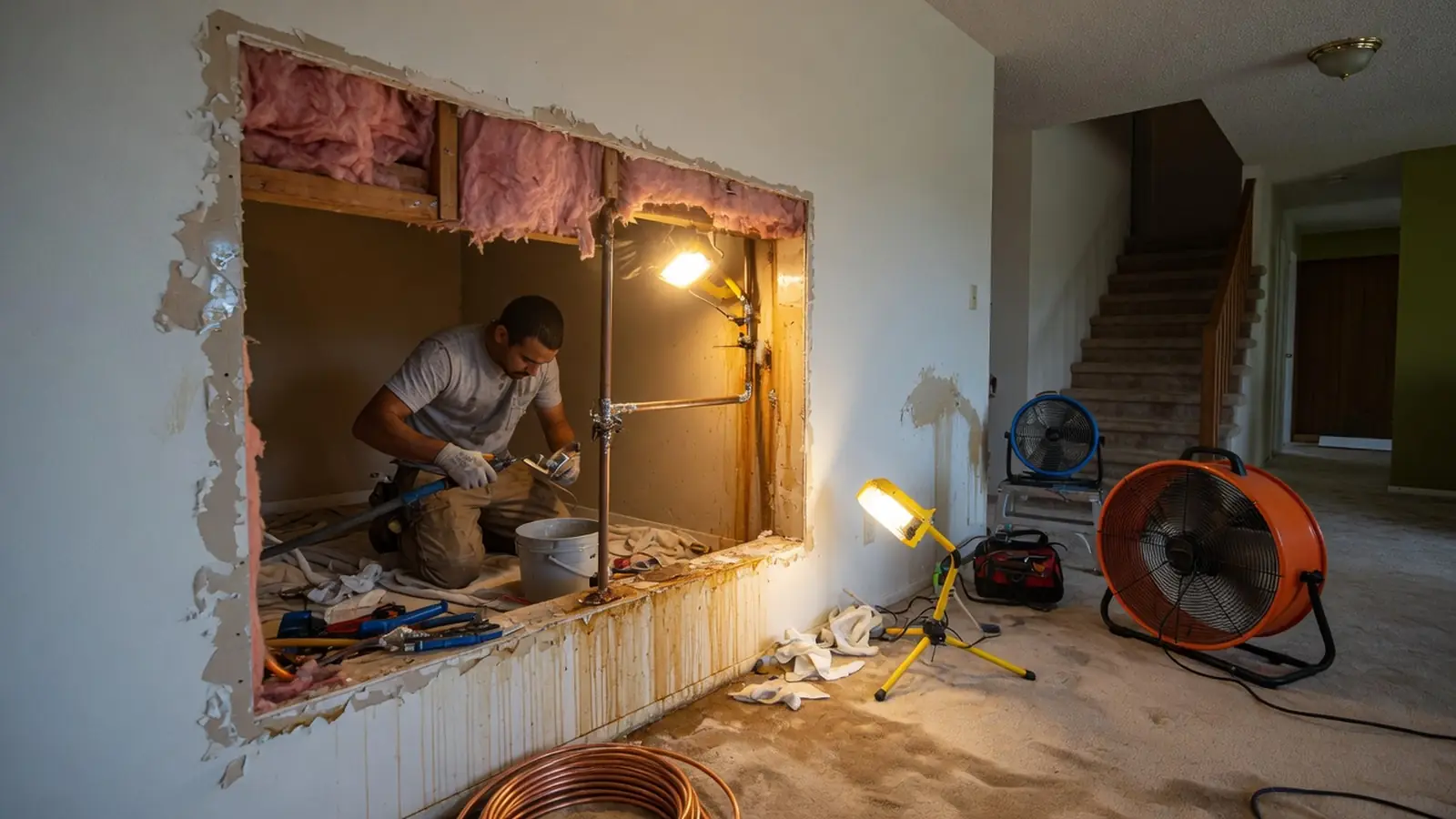
- Water Extraction And Structural Demolition. Crews pump out pooled standing water and deliver specialized hurricane surge cleanup solutions to strip contaminated drywall and wet insulation before secondary contamination spreads.
- Industrial Dehumidification And Air Movement. We position commercial low-grain refrigerant dehumidifiers and axial air movers, running systems continuously to extract moisture from masonry slabs and framing members.
- Microbial Disinfection And Clearance Testing. Technicians apply botanical antimicrobial agents across exposed framing, verifying that all building materials have reached normal equilibrium moisture content.
Why Our Mitigation Sets The Benchmark
We adhere to strict IICRC S500 standards for water restoration, relying on scientific drying logs rather than guesswork. Homeowners need independent assessment methods to distinguish cosmetic water staining treatable via dehumidification from hazardous mold requiring immediate complete demolition. When fungal colonization has already occurred, our partners provide comprehensive mold remediation and structural drying to return indoor air to healthy parameters. We document every phase with relative humidity and temperature data so property owners have full transparency for their claims.
Storm Water Extraction
High-volume submersible pumps and truck-mounted units remove bulk stormwater within hours of landfall. We target submerged flooring, wall cavities, and crawl spaces to mitigate deep saturation.
Hail Impact And Roof Leak Drying
Hail activity around our coastal coverage zone is uneven year to year: 2022 logged 308 radar signatures while 2023 logged only 89, a 3.5x spread. Comparing the two halves of 2021-2025 around this territory, radar hail signatures went from 408 to 304, representing a fall of 25 percent. We quickly locate ceiling saturation and attic pooling caused by wind-driven hail impacts.
Structural Cavity Drying
Flooded property owners require clear instructions on pulling baseboards, ventilating wet wall voids, and operating commercial dehumidifiers continuously. We use specialized injection drying systems to push warm, dry air behind cabinetry and wall assemblies.
Our Approach To Emergency Structural Drying
We focus on rigorous psychrometric monitoring and rapid containment to halt moisture migration throughout damaged homes. Every remediation protocol is tailored to preserve sound structural assemblies and protect indoor air quality without unnecessary destruction.
- 12Zip Codes Served
- 6Service Areas
- 3Services Offered
Read genuine experiences from property owners who called our crew after severe storm squalls and water intrusion flooded their homes.
“A second severe band of squalls washed out access to our street just as work was starting, but the crew staged auxiliary generators and rerouted their drying lines without losing momentum. They stayed late into the evening once roads cleared to ensure the dehumidifiers were operating at full capacity. Our baseboards and hardwood framing dried out completely ahead of the adjuster deadline.”
Marcus V.
“Our condominium board has strict rules regarding exterior generator noise and waste staging in common driveways. The team coordinated directly with our property manager, placing sound baffles and keeping all extraction hoses neatly secured along the perimeter. They resolved the water damage inside our unit without causing a single community complaint.”
Elena S.
“Four months after tropical storm winds forced rainwater past our roof flashing, our living room remains completely dry with zero musty odors or drywall staining. The crew tracked daily psychrometric readings until moisture dropped to baseline levels, preventing any hidden microbial colonies from taking root. Living through summer humidity without any recurring issues proves how thorough their initial drying truly was.”
Donald K.
“With my elderly mother using a walker and two nervous rescue dogs in the house, I was anxious about loud equipment and trip hazards everywhere. The crew took extra time to tape down every power cable safely and arranged the air movers so my mother could move freely between her bedroom and the kitchen. Their consideration for our family routine made a traumatic flooding event manageable.”
Brenda R.
Frequently Asked Questions
Should flooded drywall be removed immediately or after the insurance adjuster visits?
Homeowners should immediately remove wet drywall saturated with storm runoff to stop dangerous mold amplification rather than waiting for an adjuster. Document all moisture damage with high-resolution photos and video before cutting out drywall at least two feet above the highest waterline. Adjusters accept thorough digital evidence and dryout moisture logs, whereas delaying removal in humid conditions triggers severe fungal contamination within 48 hours.
How long does structural storm damage drying typically take?
Complete structural drying after major storm water intrusion typically takes three to seven days depending on building materials and moisture saturation. Subfloors, concrete slabs, and double-layered drywall cavities dry slower than surface trim. Commercial desiccant or low-grain refrigerant dehumidifiers must run continuously alongside high-velocity air movers until readings match established dry standards.
Can furniture and personal belongings be saved after storm water intrusion?
Solid wood and non-porous items can usually be sanitized, while upholstered furniture and porous mattresses soaked by stormwater require disposal. Extended post-storm power outages accelerate mold on upholstery and textiles. Porous furnishings contaminated by exterior storm runoff harbor bacteria and fungal spores that cannot be reliably sanitized, whereas non-porous metals, glass, and solid cabinetry can be disinfected.
How do technicians verify that hidden wall cavities are completely dry?
Technicians verify complete cavity drying using penetrating moisture probes and thermal imaging cameras that detect hidden residual pockets of wetness. Baseboards are pulled and small inspection access holes are drilled to check internal framing studs. Moisture meters provide quantitative wood moisture equivalent percentages to confirm that structural members have returned to normal baseline equilibrium.
What permits or local requirements apply to storm water remediation?
Emergency water extraction and structural drying do not require permits, but extensive structural tear-out and rebuilding require local municipal permits. Immediate mitigation to halt active degradation is exempted from permitting delays to safeguard property. However, electrical repairs, structural framing alterations, and drywall replacement exceeding local thresholds require building department inspections.